Last updated August 2026.

How are Muay Thai shorts made?
Every SIAMKICK short is made by hand in one of two rooms, a workshop in Bangkok and a workshop in Phuket, by a team of around twenty people. Nothing is outsourced to a third country, and nothing comes off an automated line. This is how a pair of Muay Thai shorts actually gets made, from fabric roll to fight night.
Where are SIAMKICK shorts made?
In Thailand, since 2018. We run two workshops, one in Bangkok and one in Phuket, with a team of around twenty people between them. Every piece we sell is cut, sewn, and finished by hand in those two rooms. There is no third-country outsourcing and no automated production line. That's not a marketing line; it's the reason the details below are possible at all. A person at a sewing machine notices when a slit is a few millimetres narrow or a waistband seam pulls. A production line does not.
Why are Muay Thai shorts hard to make?
Because the garment gets abused in three specific ways, round after round. The waistband has to hold through clinch work, where an opponent's forearms grind against your hips. The side slits have to open far enough for a head kick without tearing at the seam. And the stitching has to survive being washed several times a week, every week, for years, because that's what real training schedules do to gear. Those three things are exactly what fail first on mass-produced shorts, and they're where handmade construction earns its keep.
What goes into the construction?
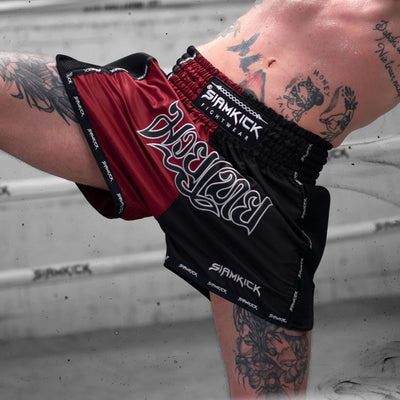
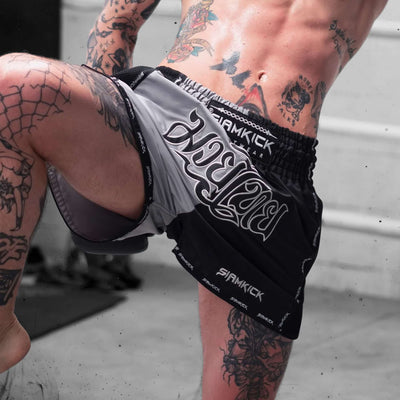
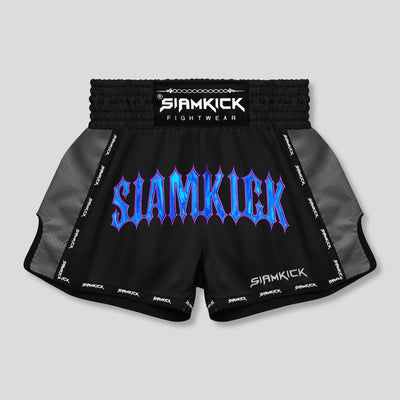
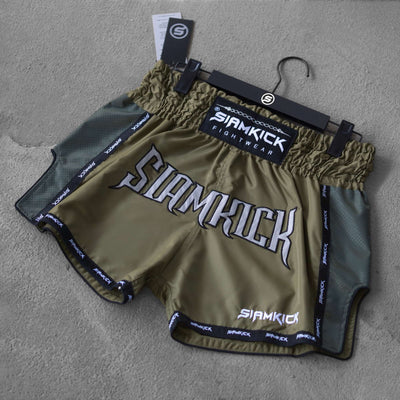
The fabric is 100% MicroSatin, our own blend of microfiber and satin, keeping the sheen and drape of traditional Thai satin with the durability and quick-dry of modern microfiber. The cut has extra-wide side slits and a high rise, so nothing binds a kick or a knee at full extension. The waistband is elastic with a drawstring, built to stay put through clinch rounds. And the seams that take the most load carry triple-reinforced stitching. The proportions themselves, from slit width to rise length to satin weight, come from a century of the sport being fought here. That inheritance is why Thai-cut shorts feel different from MMA shorts the moment you throw a kick.
How does a design earn its release?
Every piece is tried by working fighters before it goes on the site. If a cut restricts a kick, if a waistband rolls, if a seam gives, it doesn't get released. This is the main reason our range grows slowly: we would rather release four colourways that hold up than forty that don't. It's also why the catalogue you see on the shorts collection is what survived testing, not everything we tried.
How are custom shorts made?
To order, by hand. When you order custom Muay Thai shorts, your name, gym, or flag is embroidered by hand in the workshop, over a production period of three to five days, and then shipped. There's no separate custom factory; the same hands that sew the main line sew your name. That's how the turnaround stays at days rather than the weeks-long wait common for custom fightwear.
What about the mongkol and prajiad?
Our Mongkol headbands and Prajiad armbands are braided by hand from traditional Muay Thai rope. There is no machine shortcut for the weave. It's done one piece at a time, which is why the colour holds without fraying or fading. These aren't merchandise to us; they carry real ceremonial weight in the sport, which we've written about in our guide to the Wai Kru, mongkol, and prajiad.
Why does "made in Thailand" matter for fight gear?
Muay Thai equipment made outside Thailand is usually made by people who have never trained in it. The cut of a Thai-made short, the width of the slit, the length of the rise, the weight of the satin, all comes from a century of the sport being fought here. Making gear where the sport is from, by people who understand what it has to survive, is the whole point. It's also why we test with working fighters instead of focus groups: the sport's home has no shortage of people who will tell you, immediately and honestly, when a cut is wrong.
Where does part of the money go?
Back into the sport's roots. Muay Thai comes from the Thai countryside, and many of the gyms that produce its fighters run on very little. We put part of what we earn into renovating those gyms: five renovated so far, with the aim of reaching one hundred by the end of 2026. We don't publish the gym names; the point is the work rather than the publicity.
The short version
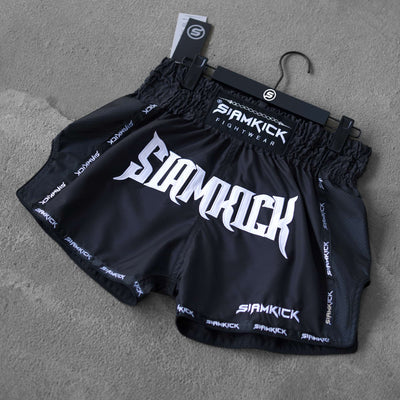
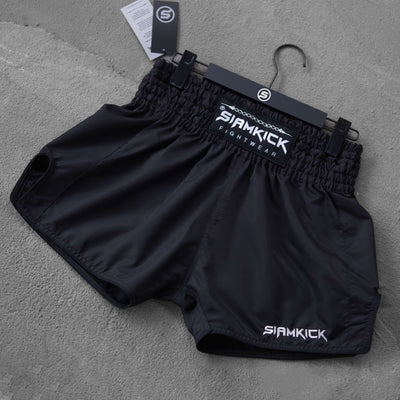
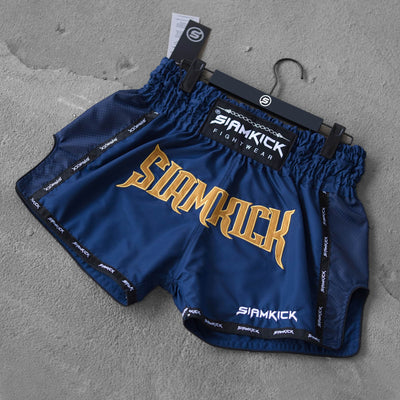
Two workshops, about twenty people, one country, no shortcuts: MicroSatin cut to the traditional proportions, triple-stitched where it takes load, tested by fighters before release, and custom pairs hand-embroidered in three to five days. If you want to see what comes out the other end, start with the Muay Thai shorts collection, and read the full story on our Made in Thailand page.