Both sports throw punches inside a roped ring. Both wear padded gloves. Both have a corner man screaming instructions between rounds. That surface resemblance is where the similarity ends. Muay Thai and boxing run on different rulebooks, different scoring philosophies, and different physical demands, and the gap shows up the moment two fighters touch gloves. It is also why so many gyms in the US now offer both under one roof, and why new students walk in asking which one they should actually sign up for.
Eight Weapons Against Two
Boxing limits a fighter to fists. Every combination, every defensive habit, every hour of pad work is built around that single constraint. Muay Thai works from a wider toolbox: fists, elbows, knees, and shins, the "art of eight limbs" that gives the sport its name. The core of the system was shaped by Siamese soldiers centuries ago, refined during the Ayutthaya Kingdom when a disarmed soldier had to keep fighting with whatever was left, which was usually just his own body. That history is still baked into the sport. A Muay Thai fighter isn't punching with extra steps bolted on. They're managing four separate ranges of attack at once, and every one of those ranges changes how they stand, breathe, and set their guard.
The Clinch Changes Everything
Boxing referees break fighters apart the second they tie up. Muay Thai does the opposite. The clinch, known as the plum, is a phase of the fight in its own right. Fighters fight for inside position on the neck and arms, then unload knees to the body or head from a range where boxing simply doesn't operate. Our breakdown of the Muay Thai clinch covers the mechanics in more depth, but the short version is this: a boxer who has never trained clinch work gets worked over the moment a Muay Thai fighter locks up a two-handed collar tie. It is a different sport hiding inside the same ring.
Because elbows and knees stay legal, Muay Thai fighters also cannot afford the loose, head-rolling defense boxers rely on. Duck under a hook in Muay Thai and you can eat a knee on the way back up. Fighters compensate with tighter guards, more forearm blocking, and checked kicks instead of pure head movement.
How Each Sport Decides a Winner
Boxing scores round by round on the 10-point must system. Whoever wins the round banks the higher score, and the fight is decided by adding it all up at the final bell. Muay Thai judges look at the fight as a whole rather than tallying rounds in isolation, and they weight effectiveness differently: kicks, knees, elbows, and clinch dominance generally outscore a clean jab, and the third round often carries the most weight since it is when the pace usually picks up after two rounds of feeling each other out. Our guide to the Muay Thai scoring system breaks down exactly how a judge fills out a card, and it explains why Muay Thai fights sometimes look slow to boxing fans in the early rounds. It is not slow. It is patient.
Round Structure and Pace
A professional Muay Thai bout runs five rounds of three minutes with two minutes of rest between them, the format used at Lumpinee and Rajadamnern and adopted by every major governing body in the sport. Boxing rounds also run three minutes but typically rest for one minute, and the total round count swings from four to twelve depending on the level of the fight. That extra rest is not a sign of a slower sport. It reflects how physically taxing repeated clinch work and kicking are on the body compared to punching alone. Weight classes in both sports follow roughly the same bracket system, borrowed originally from Western boxing, so matchmaking logic carries over almost directly between the two.
Gloves, Wraps, and Why Your Shorts Are Not Interchangeable
Both sports use gloves in a similar 8oz to 16oz range, but the padding is built for different jobs. Boxing gloves concentrate padding over the knuckles for straight punching power. Muay Thai gloves spread that padding more evenly across the hand so it holds up to blocking shins and elbows, not just throwing punches.
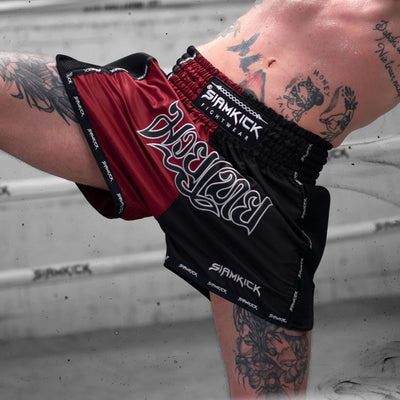
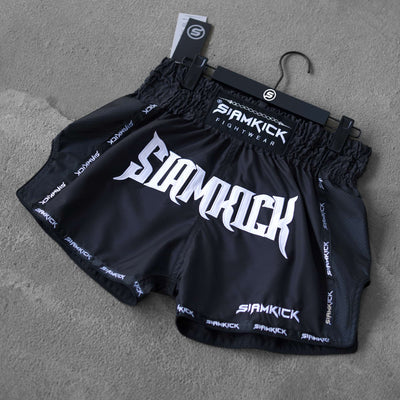
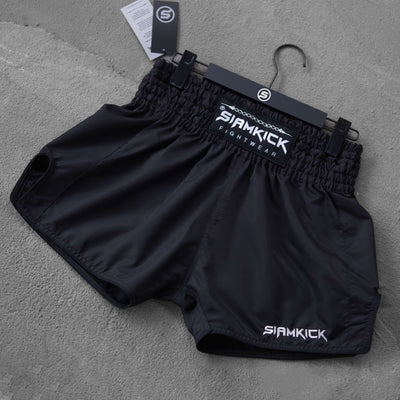
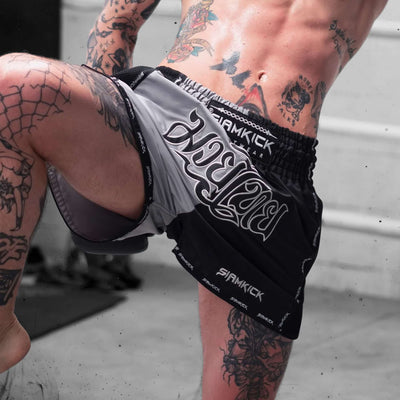
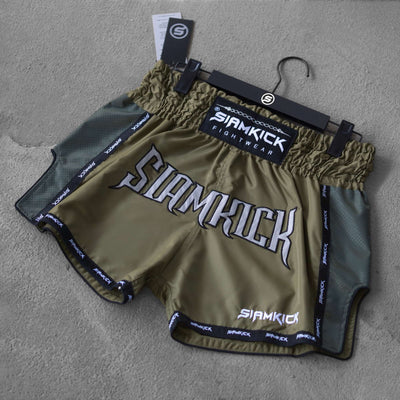
Shorts matter more than people expect too. Boxing trunks are cut for a stance that barely lifts above the waist. Muay Thai shorts are cut short and loose through the hip specifically so a fighter can throw a full head-height roundhouse without the fabric fighting them. If you are moving from a boxing gym into Muay Thai and you are still training in boxing trunks, you will feel the difference on your first high kick. Our guide to choosing Muay Thai shorts walks through what to actually look for, and our Muay Thai shorts collection is cut for that exact range of motion.
What Training Actually Feels Like
Boxing gyms build training blocks around pad work, bag rounds, and sparring focused on hand speed and defense. Muay Thai gyms, especially the traditional camps in Thailand, run on an older philosophy summed up in a saying repeated at nearly every gym: no run, no Muay Thai. Fighters are still up before sunrise for a 5 to 10 kilometer run, sometimes twice a day when a fight is close, because the cardio base has to carry five three-minute rounds of clinch work and kicking, not just three-minute rounds of punching.
Shin conditioning is the other piece boxing simply has no equivalent for. A boxer's weapons get conditioned by years of hand wraps and bag work. A Muay Thai fighter has to build up the shins specifically, through repeated rounds on pads and the heavy bag, because a kick that lands wrong on an unconditioned shin hurts the kicker almost as much as the target. There is no shortcut for it, just repetition and recovery done consistently over months rather than one hard session before a fight.
Sparring looks different too. Because knees and elbows can do real damage even at moderate intensity, sparring inside a serious Muay Thai gym tends to run lighter and more technical than people expect, with training partners trading and covering rather than trying to hurt each other. Boxing sparring can afford to run harder for longer, since there is no elbow to worry about catching by accident.
Which One Should You Train First?
Neither sport is easier than the other, they are just demanding in different ways. Boxing rewards precise footwork and head movement early, which makes it a fast way to learn distance and timing. Muay Thai asks you to manage four weapons and a clinch phase from day one, which takes longer to feel coordinated but builds a more complete striking base. Most experienced coaches will tell you to start with whichever sport has a good instructor nearby rather than agonizing over which system is objectively better, because a mediocre program in the "right" sport teaches you less than a great one in the "wrong" sport. If you are gearing up for your first class, our rundown of what to know before your first Muay Thai fight is a solid gut check before you commit.
Muay Thai's demands on your gear and your conditioning come from a system built for combat, not for sport marketing. It grew out of soldiers who had no choice but to fight with whatever was left when the weapons were gone, and that origin still shapes how the sport trains, scores, and dresses today. That is worth remembering the next time someone tells you it is just kickboxing with extra steps. It is not. It is a different fight entirely.